Building Food7Go: A Centralized Tech Platform for Cloud Kitchens
Co-founded and served as CTO for Food7Go, a Paris-based cloud kitchen network unifying multiple delivery apps into one central POS.
Challenge
The Challenge: Solving "Tablet Hell" in the Cloud Kitchen Era
The food delivery landscape in Paris was undergoing a massive shift with the rapid emergence of cloud kitchens (dark kitchens). While the business model of running delivery-only restaurants was highly attractive, the operational reality for kitchen staff was chaotic. To maximize revenue, a single kitchen needed to operate multiple virtual brands simultaneously and list them across all major delivery aggregators (UberEats, Deliveroo, Just Eat).
This multi-brand, multi-platform strategy resulted in what the industry dubbed "tablet hell." A kitchen operating three brands across three platforms suddenly had to manage nine separate tablets, all pinging simultaneously with different order formats, menu management systems, and operational flows. The resulting cognitive overload led to missed orders, delayed prep times, and inaccurate inventory tracking.
As the Co-founder and CTO of Food7Go, our vision was to revolutionize this fragmented ecosystem. The challenge was to engineer a centralized, integrated platform and a unified Point of Sale (POS) terminal from the ground up. We needed a robust software architecture capable of aggregating incoming orders from every major delivery app, standardizing them, and routing them to a single screen. Furthermore, the platform needed to empower our network of kitchens to push menu updates, manage stock availability, and track financials for multiple virtual brands from one central dashboard.
Approach
Our Approach: Architecting a Unified Aggregation Platform
To tackle this complex integration challenge, I led the technical strategy and managed a dedicated team of three software engineers. Building a product that acts as the central nervous system for a high-volume commercial kitchen required a relentless focus on reliability, speed, and real-time data synchronization.
Building the Centralized POS and Dashboard
We designed a dual-interface system. First, we built an incredibly fast, highly resilient order-receiving terminal for the kitchen staff, stripping away unnecessary UI elements to focus entirely on rapid order processing, ticket printing, and courier dispatch. Second, we developed a comprehensive administrative dashboard for franchise owners and brand managers to handle menu engineering and financial reporting.
Our technology stack was heavily reliant on modern JavaScript ecosystems, utilizing TypeScript to ensure type safety and reduce runtime errors across our complex data models. We leveraged React for building highly interactive, component-based user interfaces on the administrative side, while utilizing Angular for specific, highly structured front-end modules.
Rapid Scaling and Ecosystem Recognition
As CTO, I balanced writing code with managing the product roadmap, overseeing API integrations with fiercely guarded delivery aggregator ecosystems, and navigating the technical due diligence required for fundraising. Our technical execution and business model quickly gained traction in the vibrant French startup ecosystem. We successfully raised a €300,000 pre-seed round, which allowed us to accelerate our development cycle.
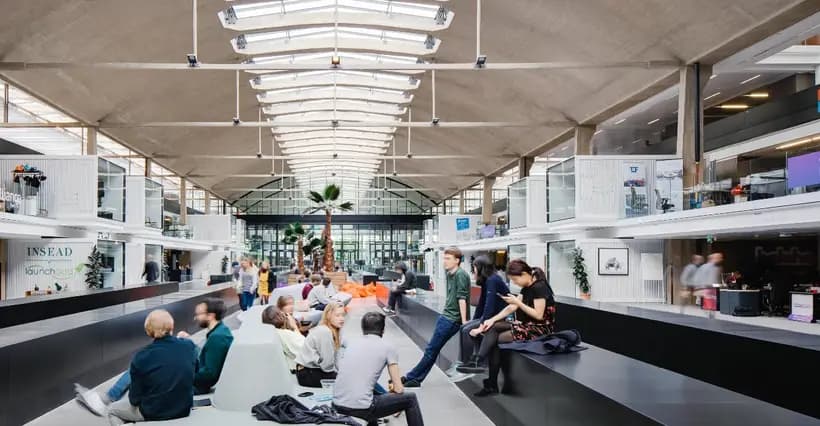
Our momentum caught the attention of Station F, the world's largest startup campus, where we were selected to participate in their highly competitive incubator program. The robustness of our tech platform and our initial traction further earned us a coveted spot in their prestigious Future 40 program for 2021, recognizing us as one of the most promising early-stage companies in the network. This exposure led to multiple startup interviews and opportunities to pitch our vision to a wider audience.
Outcome
The Outcome: High Growth, Hard Lessons, and Unit Economics
During the 1.6 years we operated Food7Go, the platform successfully processed over 6,000 orders, generating €180,000 in revenue. We proved the technical viability of our unified system, successfully scaling the software to support 6 distinct virtual food brands operating simultaneously across a network of 15 partner restaurants in Paris. The technology successfully cured "tablet hell," significantly reducing order error rates and prep times for our partners.
The Reality of FoodTech Scalability
Despite the flawless execution of the technology and our strong early metrics, the broader business model encountered fatal headwinds. Operating a cloud kitchen network is highly capital-intensive, and the margins in food delivery are notoriously razor-thin. When analyzing our unit economics—factoring in food costs, packaging, aggregator commission fees (often up to 30%), and the logistical costs of operating physical kitchen spaces—the customer acquisition cost (CAC) and operational overhead outpaced the lifetime value (LTV) of the orders.
A Difficult Pivot and Shutdown
To achieve profitability, we needed massive economies of scale, which required a significant Series A injection. Unfortunately, the venture capital climate shifted, and investors became highly skeptical of asset-heavy food-tech models. Failing to secure the necessary follow-on investment to bridge the gap to profitability, we made the difficult but responsible decision as founders to shut down operations.
While Food7Go ultimately closed its doors, the experience was a masterclass in executive leadership. It solidified my ability to architect complex, multi-platform software systems, lead agile engineering teams under intense pressure, and deeply integrate technical strategy with rigorous business and financial realities.
Stack & Methods
Architecture
Project Management
Frontend Ecosystem
Industry Focus
Expert

Mikael Gross
Technical Project Management
A global Technical PM expert in large-scale execution, greenfield builds, and strategy.